Bonnie Barker – SAP software Developer
Bonnie Barker is a software developer for SAP Software & Solutions,
specifically developing Information systems for fashion retailers including
demand forecasting based on previous years data.
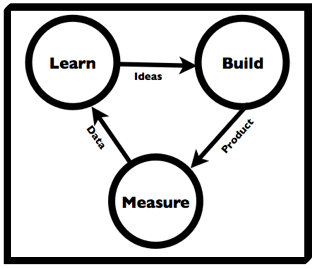
On an average project, she uses a lean strategy. They used to follow a
waterfall strategy but changed to lean in order to be more flexible and
responsive to changes in project requirements and scope. In a waterfall system
they would have to throw everything out and start over if something was
changed, which is not the case with a lean strategy. They usually break it up
into 1 month cycles. For software development they almost always use AGILE
strategies, and follow a “Tester, then development” process. She uses SCRUM
virtually every day, and on ever project she is working on.
Usually, when working on a project, you will be on a team, but will have individual pieces of the project as their own responsibility, and will only meet to put them together. When you do peer programming, you can only ever do it for a few hours because it hurts morale and is exhausting. Peer programming is usually only done to solve a problem, rather than work normally on a project together. Mrs. Barker is considered an expert at her company, so she usually peer programs with other people in order to mentor them, or upscale them. Meaning that she is training them to be better at something, rather than just working together as equals on a project; she usually does this to train someone to cover for a planned vacation or sick leave.
Most communication with her team is done face to face, but she starts her day with emails about whatever problems had popped up overnight. Conference calls are reserved for long distance teamwork- such as a project involving the team based in Switzerland recently, where they were skyping every day for a few weeks. But usually, the best way to communicate with your team is to walk over and talk about whatever you need to talk about.
When asked about her daily routine, she said that probably half of it is putting out fires, with the other half mixed between working on projects, and other tasks. Sometimes it is all problems, because she has become an expert with their environment and system- newer people working in IT invariably spend more time on their tasks, but as their experience grows, they end up becoming fire fighters a lot more because people will go to them for their expertise or opinion.
Usually, when working on a project, you will be on a team, but will have individual pieces of the project as their own responsibility, and will only meet to put them together. When you do peer programming, you can only ever do it for a few hours because it hurts morale and is exhausting. Peer programming is usually only done to solve a problem, rather than work normally on a project together. Mrs. Barker is considered an expert at her company, so she usually peer programs with other people in order to mentor them, or upscale them. Meaning that she is training them to be better at something, rather than just working together as equals on a project; she usually does this to train someone to cover for a planned vacation or sick leave.
Most communication with her team is done face to face, but she starts her day with emails about whatever problems had popped up overnight. Conference calls are reserved for long distance teamwork- such as a project involving the team based in Switzerland recently, where they were skyping every day for a few weeks. But usually, the best way to communicate with your team is to walk over and talk about whatever you need to talk about.
When asked about her daily routine, she said that probably half of it is putting out fires, with the other half mixed between working on projects, and other tasks. Sometimes it is all problems, because she has become an expert with their environment and system- newer people working in IT invariably spend more time on their tasks, but as their experience grows, they end up becoming fire fighters a lot more because people will go to them for their expertise or opinion.
According to Mrs. Barker the most common failure in project management is that people always set their deadline first, and then try to shove too much into their schedule up to the deadline. Instead, they should set the deadline, and find the absolute bare minimum that they can deliver as a shippable product by that time and then if they accomplish that, reevaluate for additional features. This is much better than wasting time on features you never finish and miss the deadline, burnout, or both. Managing scope is the biggest failure in project management, with communication failures (Either from poor, or lacking communication) being a close second.
In contrast, the most successful project managers are the ones who pay
attention to details. A good project manager is able to motivate people, and
get work done, even when they have no authority over them. Simply telling
someone to do something isn’t enough. Too many project managers are certified
Project Management professionals, but they don’t know what they are doing- even
if they understand the terminology. It is all about the details and being
energized enough to go that extra mile for your team’s success. Additionally,
free food is always a valid and reliable strategy for mission success.
The most important skill for someone working in IT according to Mrs.
Barker is communication. The better you are at communication, the better off
you are no matter where you are working. Additionally, no matter what you do,
knowing an object oriented language is required. You don’t have to know all of
them- after the first few languages, learning a new one is really just all
about learning the syntax, because you end up framing questions and thoughts to
solve problems using the language. It is more important to understand how to
organize your program.
As for advice for someone going into the IT/IS field, the best advice she could offer was to “stay on top of your game,” meaning to keep learning new skills, and updating old ones. Essentially, don’t get complacent in a position and become a dinosaur. Stay flexible and be able to adapt to new jobs- you won’t be in the same job you started at, 20 years from now. Mrs. Barker is a programmer by trade, but she couldn’t apply for an open, and very good, project management positions when she lost her job because she wasn’t certified. So when she found another job she studied for the certification, so that if she ever needed another job she could get it.
As for advice for someone going into the IT/IS field, the best advice she could offer was to “stay on top of your game,” meaning to keep learning new skills, and updating old ones. Essentially, don’t get complacent in a position and become a dinosaur. Stay flexible and be able to adapt to new jobs- you won’t be in the same job you started at, 20 years from now. Mrs. Barker is a programmer by trade, but she couldn’t apply for an open, and very good, project management positions when she lost her job because she wasn’t certified. So when she found another job she studied for the certification, so that if she ever needed another job she could get it.
The most important thing according to her is to do something you love. Don’t do something you hate for longer than you have to. Pay the bills, but find a way to do it by doing something you love doing because you will be doing it too much, for too long, for it to be something you don’t love doing.
____________________________________________________________________________
Brian Gould- Safeway, Business Intelligence Dept.
Brian Gould is a Senior Tester for Safeway’s Business intelligence department,
and the former director of Quality assurance at Apollo Group and the University
of Phoenix. Currently, he is working on an in house web based inventory storage
accounting system, which is used to process inventory for Safeway, in order to
keep products on the shelf and anticipate fluctuations in demand. While working
for the Apollo Group, he designed, developed, and managed an SIC for online classrooms,
much like the Blackboard system ASU uses currently.
Mr. Gould virtually always uses agile development strategies on his
projects. The biggest reason for doing this is that it lets you fix mistakes
before they become a really big problem, which is what happens when you use a
waterfall system, and wait until the end to confirm that you are doing what you
are supposed to be doing, in the way the product owner wants it. When I asked
him about Scrum he laughed and said he lives in scrum, and every product uses
it. He also talked about his daily meeting, which he called a “daily standup”
because it is essentially a daily meeting where everyone stands around in a
circle. They do it standing because it is supposed to be short and to the point.
The scrum master is in charge and organizes the meeting, which is usually very
early in the day, as a sort of check in. This is very similar to what we have
done at Target, with our daily huddles. Mostly, they go around the circle, and
say what they did yesterday, what they plan to do today, and anything that
might be an obstacle that they might need help on. If there is anything else
that needs to be said or addressed in more detail, they schedule a secondary
meeting specifically to address that problem.
Mr. Gould’s daily schedule is basically to check his email for any outstanding problems, and to address those problems. Then, when he has solved those problems, he begins to work on his main project, with additional firefighting throughout the day. The daily standup meeting occurs sometimes during that problem solving, or possibly between finishing dealing with those problems and starting in on his regular project, or sometimes afterwards- depending on the status of the team.
Mr. Gould’s daily schedule is basically to check his email for any outstanding problems, and to address those problems. Then, when he has solved those problems, he begins to work on his main project, with additional firefighting throughout the day. The daily standup meeting occurs sometimes during that problem solving, or possibly between finishing dealing with those problems and starting in on his regular project, or sometimes afterwards- depending on the status of the team.
Every project is as part of a team. Everyone works on their sections separately
but, as a team on a whole project, so that everyone is there to help each other
when they need it. Usually a team consists of three developers, two testers, a
scrum master, and the product owner. Usually, one of the best ways to communicate
as a team is to sit close together, and have face to face communication. One of
the most common is to stand up at their cubicle and catch the other person’s
eye, or talk to them if they are close enough. He called this “prairie dogging.”
Either that, or go walk over to them. The second most common way to communicate
is via email. For some reason everyone hates using the phone to talk, but
texting is decently common.
When working on a project, the most important thing is to prioritize from
the technical tree. Focus on what you can accomplish, and on what is most
important and do that. Identify all of the secondary features, and set them
aside for if there is extra time. Project management is basically “herding cats”
(That is a technical term) and the last thing you need is to have herded them
into doing something that isn’t necessary, and something vital doesn’t get
done. The hardest part of a project is identifying the requirements for a
project. There is often a gap between what is said, and what is actually
needed. Your job is to close those gaps, and make sure the end product fits
what the product own actually wants. One of the biggest trappings you will run
into is that customers will tell you their solution to a problem, rather than
just the problem. Don’t ever agree to their solution until you understand the
problem and are sure it is the right solution- product owners always think they
know more than they actually do about the process.
The most important skill for working in IT is being analytical. You
have to be able to take any problem and break it apart into all of its pieces,
and identify what is really wrong. Listening, and knowing the right question to
ask will make or break a project manager.